Qualitative
I have received formal training to collect analyze and present findings for experimental, quasi-experiments, and observational qualitative data using:
- Survey methods
- Interview approaches
- Textual analysis
- Spatial data (visual)
The Government of Canada
Project in progress
In the fall of 2023 the Government of Canada (GC) pushed forward an initiative CAN-ASC-1.1 as part of Accessibility Standards Canada to update the standards of employment regarding accessibility at the federal level. The government invited individuals both within and outside the GC to weigh in and provide recommendations for language and standards that individuals would like to see implemented at the national level.
Project Considerations
- Provide editorial such as spelling, grammar, formatting and accessibility
- Propose technical feedback: dimensions or applications of the standard
- Introduce general comments on the overall standard, or introduce a new section where there currently lacks substance
Outcomes
- Coordinated with Canadian civil servants to validate a novel definition of inclusion for individuals with disabilities
- Leveraged expertise in labour economics and knowledge of wage gaps to propose more effective and equitable compensation mechanisms
- Proposed recommendations for training material that would provide the vocabulary civil servants would need in order to collaborate with neurominorities successfully
Journalist
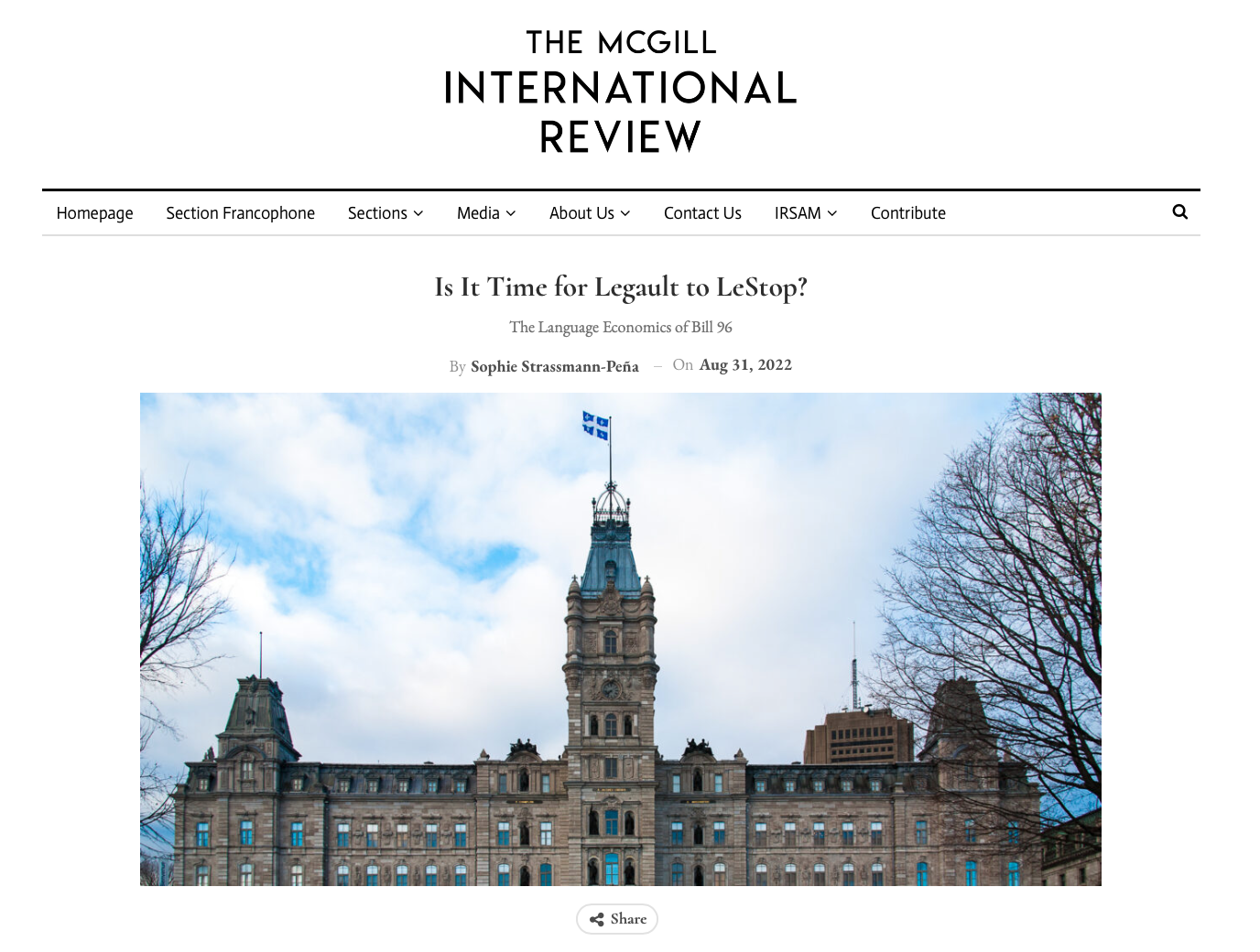
Language Economics of Bill 96
Leveraged research expertise in language economics and computational linguistics to report on Bill 96, add new perspectives on the debate, and propose sustainable policy alternatives which would make all stakeholders better off.
Strassmann-Peña, Sophie (2022). "Is It Time
for Legault to LeStop?: The Language Economics
of Bill 96." Newspaper Article. McGill
University. <https://www.mironline.ca/is-it-time-for-legault-to-lestop/>.
Training Consultant
During my time at the McGill International Review (MIR), I produced content and innovated on the policies, materials, and best practices of our organization. MIR is a key pipeline in shaping the dialogue for Canada. Our journalists go on to work at places like the Canadian Broadcasting Corporation (CBC).
In collaboration with the McGill International Review (MIR), I moved forward the needle of journalistic training on modernizing and upskilling our toolset to leverage AI, train in data journalism, and responsible coverage of technology in the news so that our graduates will be prepared to take on the news of the day.

Outcomes
- Provided easy to use training resources for members seeking to learn to work with data in R and Python for journalistic purposes.
- MIR journalists are trained to leverage AI assistance to make strong titles for maximum journalistic impact.
- I discovered that our AI tools which were producing ableist title recommendation results so that MIR could adapt accordingly.
- Introduced AI generated images as an alternative public domain images for our articles.
Researcher-Centric Methodology
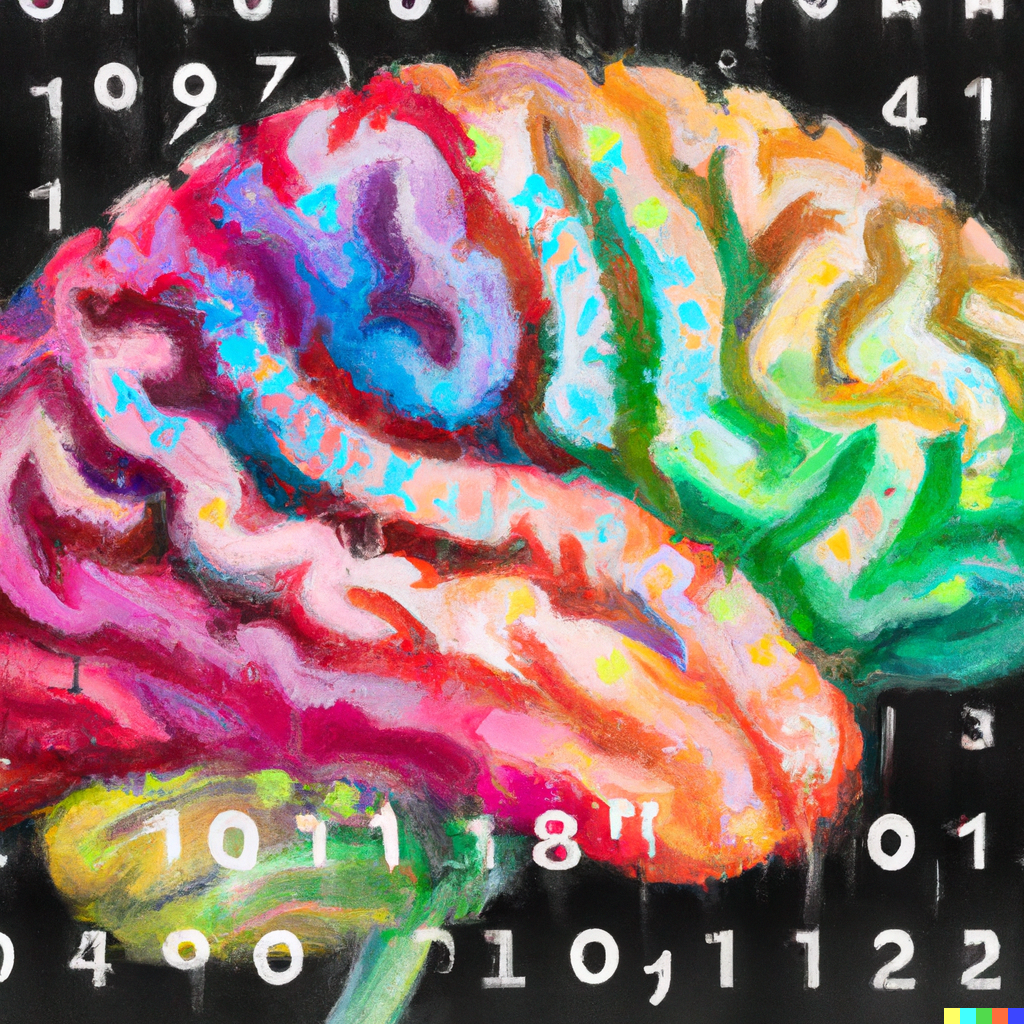
As a creative individual, I have a natural strength in solving problems with no clear solution. During my time in the Department of Geography at McGill University, I consolidated four years of research into a qualitative vision paper to explain how creativity could work in a more systematic way.
Innovation and technology matter as an area of study in economics because they allow for us to be more productive without using additional people or physical capital to complete tasks.
My framework provides a new approach for systematically creating new ideas by treating the researcher as part of the research process. Having conducted countless case studies over the years in my personal time across various fields of research, I determined that including researcher-centric methodology into an educational practicum is the most effective way to prepare researchers for producing truly impactful work.
History of Thought
The history of economic thought is a field in economics which emphasizes a historical analysis of the evolving discipline, and what mistakes we can learn from where we have already been. Economists with an adequate education in the history of economic thought are trained to view their research within a broader narrative of decisionmaking.
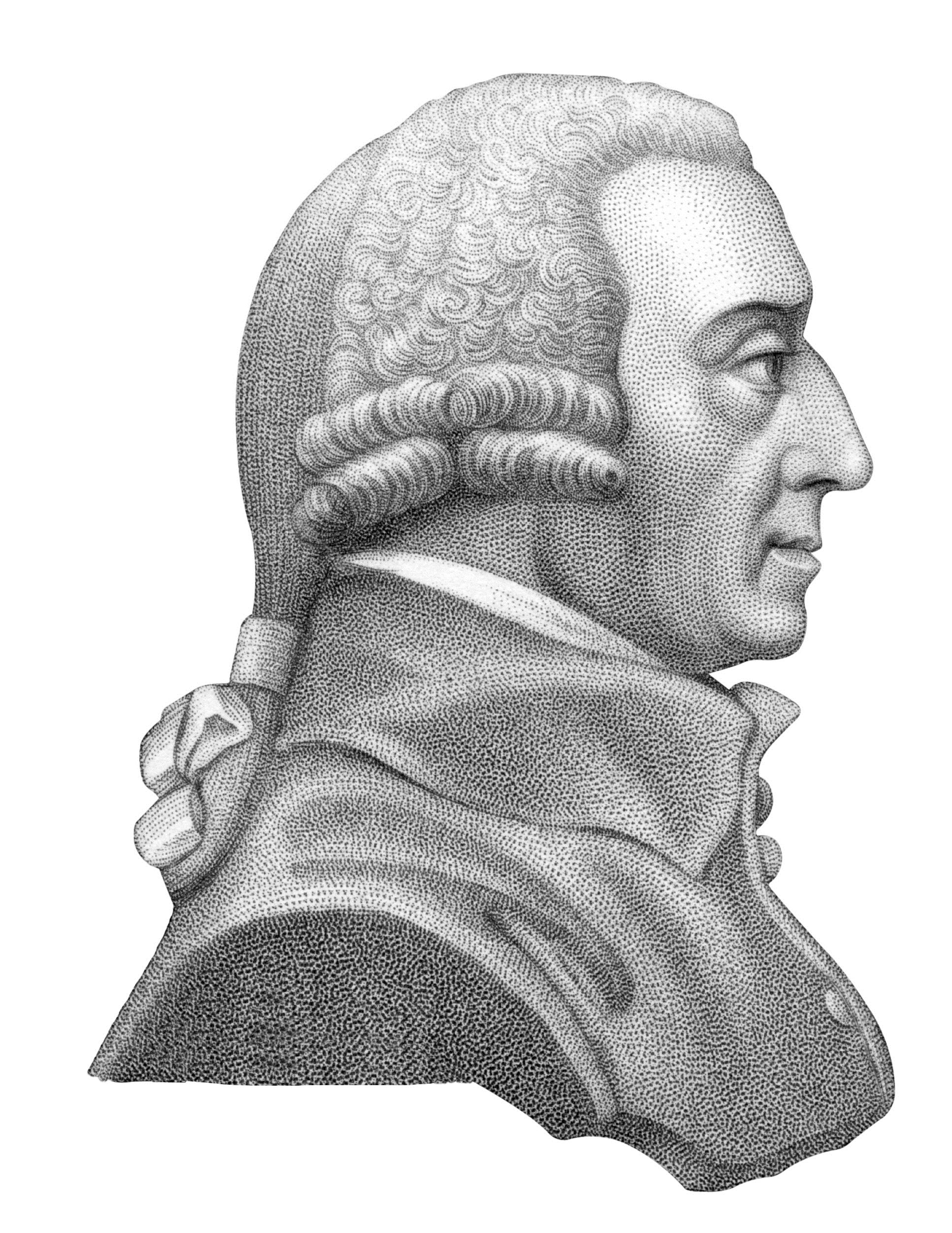
When Ben Bernanke responded to the 2008 housing crisis, he relied on a broader historical perspective which had largely been lost in the time since the Great Depression. Without Bernanke’s unique and atypical personal interest in the history of thought, scholars retrospectively agree that the crash of 2008 would have devolved into a modern depression.
While it is no substitute for innovative quantitative analysis, a historical perspective is valuable because of the power it has to help us learn from mistakes of the past.
Economists had very little to do with the spread of the British Empire, and this story challenges how we understand who benefits from colonization. When we consider effective policymaking today, we must properly identify problems before jumping to quick-fixes (Strassmann, 2022).
- Strassmann, Sophie E. “John Stuart Mill On the Merits of Colonization.”
McGill Journal of Economics, no. 2022 Edition, 12 Apr. 2022.
https://doi.org/10.17605/OSF.IO/J4BV9
- MJE URL (unstable): https://issuu.com/esamcgill/docs/\_final_mje_2022
The Desai Foundation
- Designed and implemented a fundraising program
- Gained key experience in leadership and administration